STEP-PARENTING
Stepparenting can be a difficult role for most families. Think of the "wicked" image of Cinderella's stepmother and stepsisters. Children have rarely or never been exposed to any stories of wonderful stepmothers or stepfathers. In their unconscious is only the expectation of a negative and feared relationship. Children don't want an adult who expects to displace a parent they love. It's probably a good idea to come into the family viewing yourself in a relationship similar to what an aunt or uncle might have with the child. Children are accustomed to both respecting and loving aunts and uncles, and if you describe your relationship to them that way, it may help them to accept you. Here are some other tips for stepparents that may help along the way:
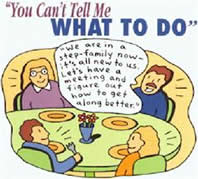 Don’t begin as the disciplinarian. Discuss discipline issues privately with the children’s parent. Don’t begin as the disciplinarian. Discuss discipline issues privately with the children’s parent.
- Change children’s lives gradually. If you plan to marry their parent, join them for some, but not all, activities at first.
- Try a one-on-one excursion with the children to get to know them privately.
- Leave some time alone for the other parent and the children until you’ve been accepted.
- Try to keep your life going forward. When you adjust well after a divorce, your children will look to you as a role model and will develop confidence in their ability to succeed in life. Bad divorces cause more stress for children. Adolescents whose parents have difficult divorces are more likely to become oppositional and abuse illegal substances.
- If the other parent is abusive or reluctant to keep a relationship going with the children, don’t force or encourage that negative relationship. It will only result in your children being abused or feeling rejected by the other parent. It’s better to move forward and help the children develop positive relationships with other important adults in their lives, such as grandparents, aunts, uncles, and close friends.
- If stepchildren are joining you, recognize both the benefits of new friendships and the potential for new rivalries.
- Give children opportunities to express their fears and worries.
- Don’t speak negatively about the children’s other parent. If you can manage to, describe the other parent positively and respectfully. If you can’t, say nothing.
- Be respectful and positive about the children’s grandparents. You need them on your side, and the children should be allowed to enjoy their grandparents.
- Be patient. You’re not the Brady Bunch yet, but there is potential for a good family life ahead.
©2007
by Sylvia B. Rimm. All rights reserved. This publication, or
parts thereof, may not be reproduced in any form without written
permission of the author. |
